
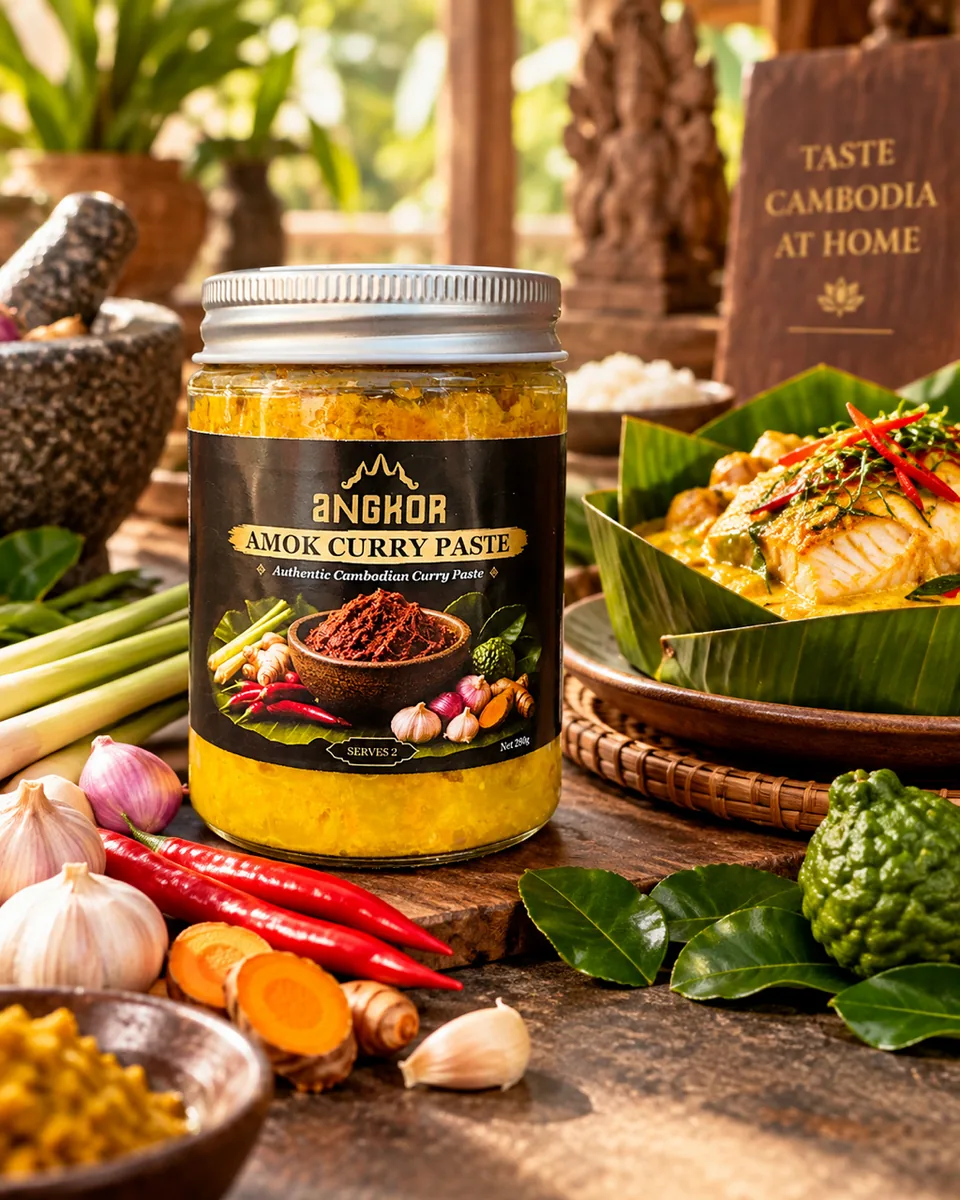
If you have eaten Fish Amok, a Cambodian red curry or a plate of lemongrass fried rice, you have already tasted kroeung. It is the fresh herb and spice paste that sits underneath much of Khmer cooking, and it is the reason Cambodian food tastes fragrant and bright rather than simply hot.
At ANGKOR, 389 Spencer Street, West Melbourne, our dinner menu sums up our kitchen as "fragrant kroeung, charcoal grills, slow-cooked comfort and family recipes". This guide explains what kroeung is, what goes into it, which of our dishes are built on it, and how to cook with it at home.
Kroeung in a few words
Kroeung (sometimes written "kreung") is a Khmer word for a pounded paste of fresh aromatics. Traditionally it is made in a mortar and pestle: lemongrass, galangal, turmeric, garlic, shallots and kaffir lime are pounded together until they release their oils and turn into a thick, fragrant paste.
It is less a single recipe than a family of pastes. Cooks adjust the balance for each dish and each household. Some versions lean on turmeric for a golden colour, some use more lemongrass for a fresher, greener taste, and some add dried red chilli for colour and warmth. What they share is a fresh, citrusy, earthy base that you can smell the moment it hits the pan.
How kroeung differs from Thai curry paste
People often compare kroeung with Thai curry pastes, and they are related. The difference is in the emphasis. Kroeung is usually built around lemongrass, galangal and turmeric, and it is generally milder in chilli heat. The fragrance comes first, and heat is something you add to taste at the table. That is why Cambodian curries are often a good choice for diners who love flavour but are cautious about spice.
The core ingredients
Most kroeung starts with the same handful of aromatics:
- Lemongrass: the backbone of the paste, giving a clean citrus fragrance.
- Galangal: a firm, peppery relative of ginger with a pine-like aroma.
- Turmeric: earthy flavour and a warm golden colour.
- Kaffir lime: leaves or zest for a sharp, floral lift.
- Garlic and shallots: sweetness and depth.
Many kitchens also add savoury ingredients such as shrimp paste or fish sauce, plus chilli. Our own jar is a good example. The ingredients listed for the ANGKOR Amok Curry Paste are galangal, shallots, garlic, turmeric, lemongrass, shrimp (crustacean), kaffir lime, fish sauce (fish), vegetable oil and long red chilli.
Where to taste kroeung at ANGKOR
Kroeung runs through our menu. These dishes show it off best:
Fish Amok ($34.50)
Our signature. Fish Amok is a fragrant steamed coconut curry with aromatic kroeung, mackerel, Chinese broccoli and peanuts. Steaming keeps the curry soft and almost custard-like, so the kroeung stays gentle and perfumed. If you only try one Cambodian dish, make it this one. Read more on our Fish Amok in Melbourne page.
Traditional Red Curry ($25.50)
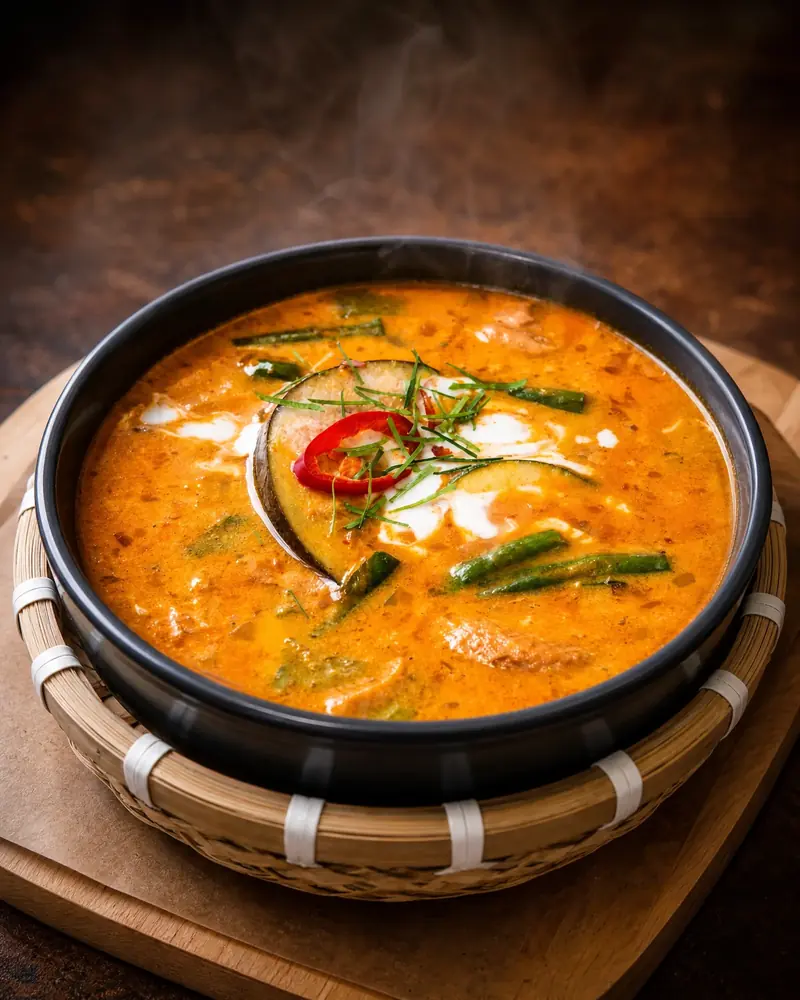
Our Traditional Red Curry is a Cambodian kroeung curry in coconut broth with sweet potatoes, eggplant, green beans and herbs, with a choice of tofu or chicken. Here the paste is fried first to bring out its aroma, then simmered with coconut. Add Asian Roti (2 pieces, $6.90) or Steamed Jasmine Rice ($5.00) to soak up the sauce. Our Cambodian curry guide goes deeper.
Lemongrass Fried Rice ($23.50)
Lemongrass Fried Rice is made with homemade kroeung, egg, omelette and seasonal vegetables. Choose tofu, or add chicken (+$3.50) or beef (+$4.00). It shows how kroeung works beyond curry: stir-fried with rice, it becomes a quick, fragrant everyday meal. The tofu version is a good pick for vegetarians; see our vegetarian Cambodian food guide and please check ingredients with our team.
At lunch
Our lunch menu includes a Fish Amok Rice Bowl ($22.90) and a Red Curry Bowl ($19.90), both built on kroeung and served over jasmine rice with house salad.
Cooking with kroeung at home
Making kroeung from scratch takes time: lots of peeling, slicing and pounding. A ready-made paste gets you most of the way in minutes. Here are simple ways to use one:
- Fish Amok: stir the paste with coconut milk, add fish and greens, and steam or gently simmer. Our step-by-step home Fish Amok guide walks you through it.
- A quick coconut curry: fry a spoonful of paste in a little oil until fragrant, add coconut milk, then vegetables, tofu or chicken.
- Marinades: rub a little paste over chicken or pork before grilling, a very Khmer approach. See our Cambodian grilled food guide for inspiration.
- Fried rice or noodles: add a teaspoon to the wok with garlic before the rice goes in.
Start with less paste than you think and add more to taste. Fresh kroeung is concentrated, and the aim is fragrance, not overpowering heat.
The ANGKOR Amok Curry Paste
Our Amok Curry Paste is made in our kitchen and sold in a 280 g jar for $15.00 including GST. It ships Australia-wide (flat $22.75 parcel post per order, Australia only), and you can also ask our team about buying a jar when you visit the restaurant. Please note it contains crustacean and fish, and our kitchen also handles peanuts, tree nuts, gluten, soy, sesame, egg, milk, crustaceans and fish.
Kroeung and the family table
For many Cambodian families, kroeung is part of everyday life: pounded fresh, shared between neighbours and adjusted to each cook's taste. Our recipes come from that tradition. Read more in Khmer family recipes and on our story page.
Taste it in West Melbourne
The best way to understand kroeung is to taste it side by side: Fish Amok, red curry and lemongrass fried rice on one table. New to Cambodian food? Our menu suggests starting with Fish Amok, Beef Loc Lac or My Grandmother's Dish, and for two people, two to three starters, two mains and rice or roti to share. Our first-timer's guide has more tips.
Find us at 389 Spencer Street, West Melbourne, a short walk from Southern Cross Station and Marvel Stadium.
Book a Table · View the Dinner Menu · Shop the Amok Curry Paste · Directions and hours
Please tell our team about any allergies when ordering. Prices are taken from our live menus and can change, so please check the current menu when you visit.